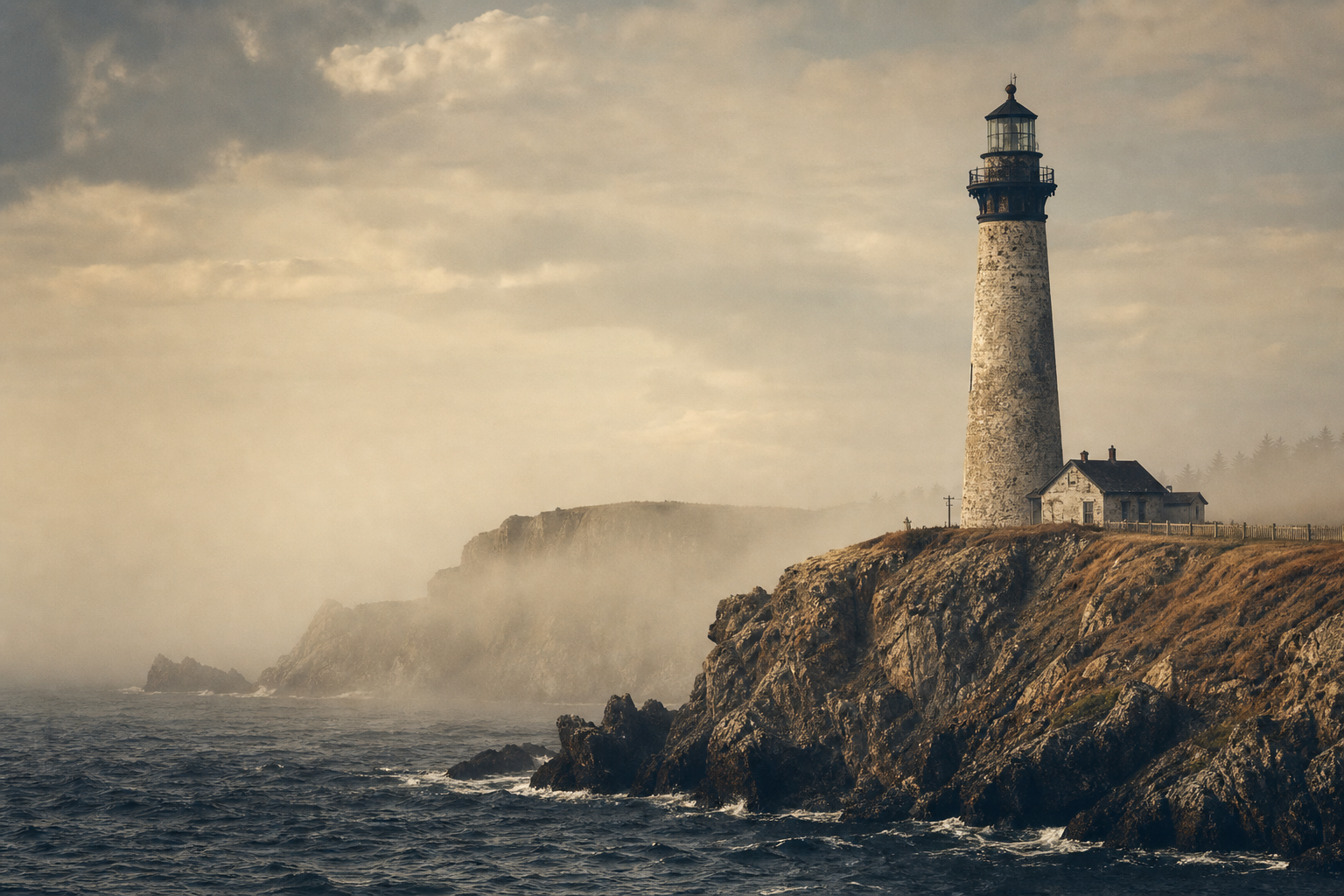
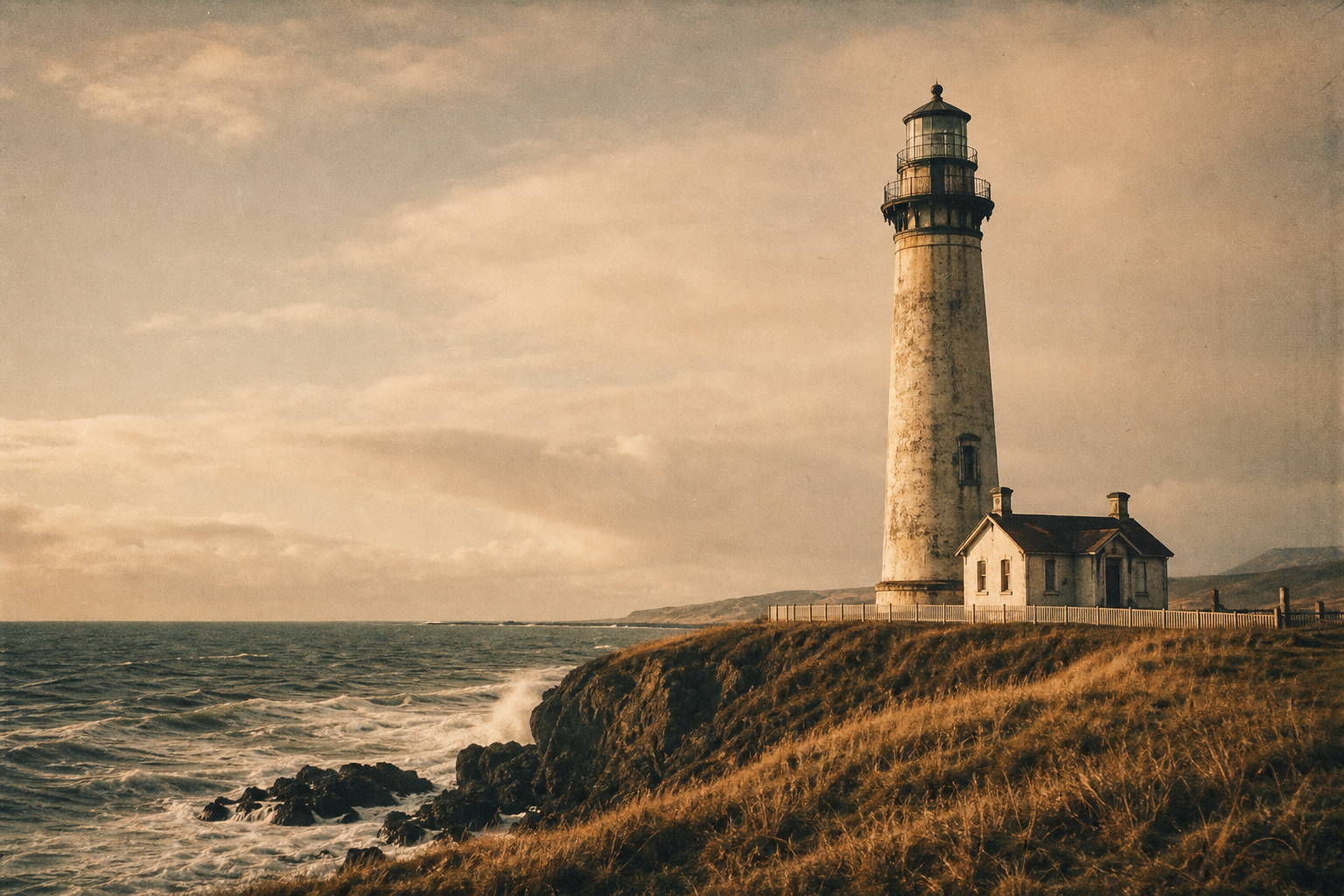
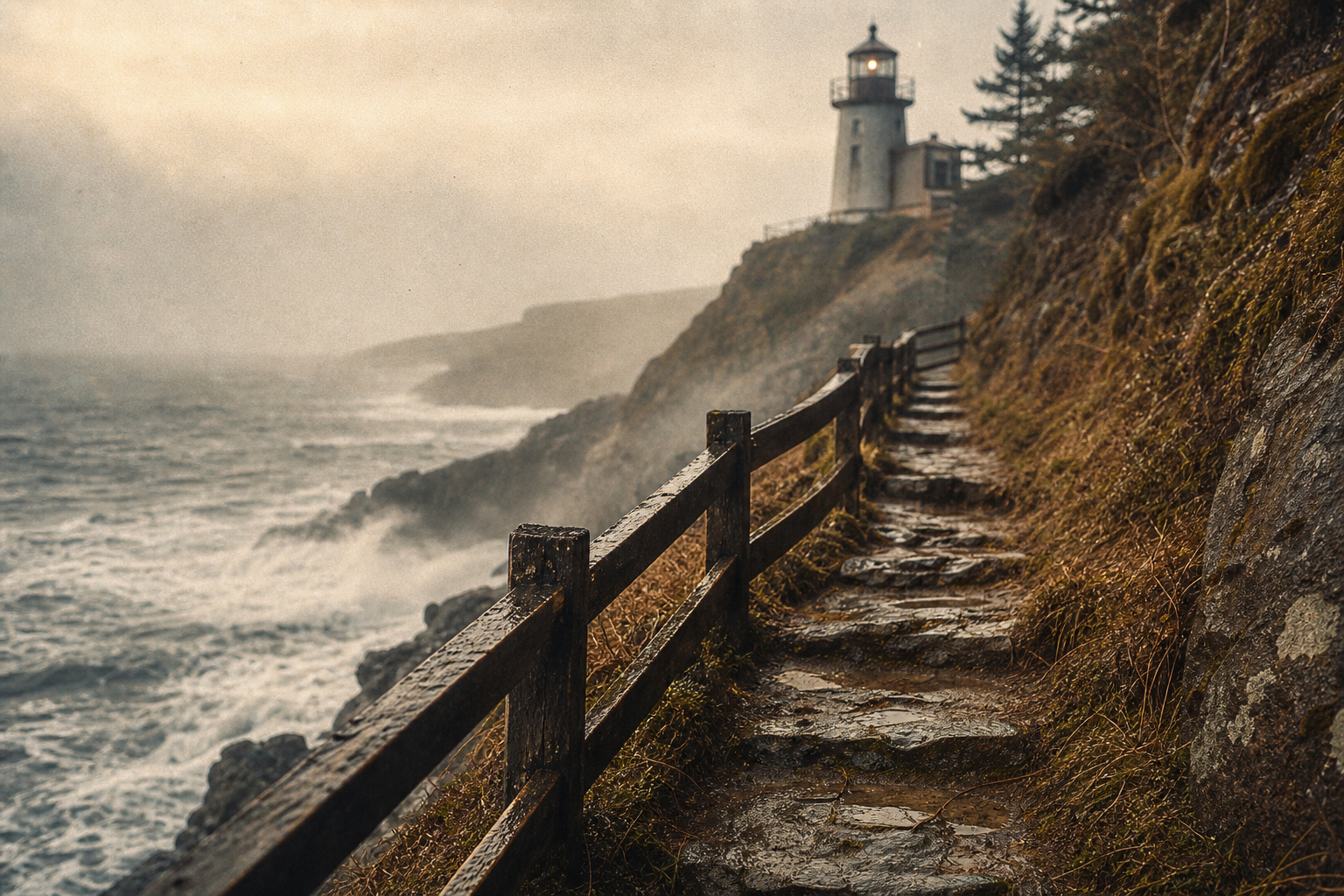
Along shipping lanes shaped by storms and shoals, northern coast lights evolved with port trade, harsher weather records, and growing settlements that depended on safe return.
1820s–1840s
Early coastal beacons
Simple oil lamps and timber markers guided coastal packets through frequent fog banks and reef-strewn approaches.
1850s–1890s
Engineered tower expansion
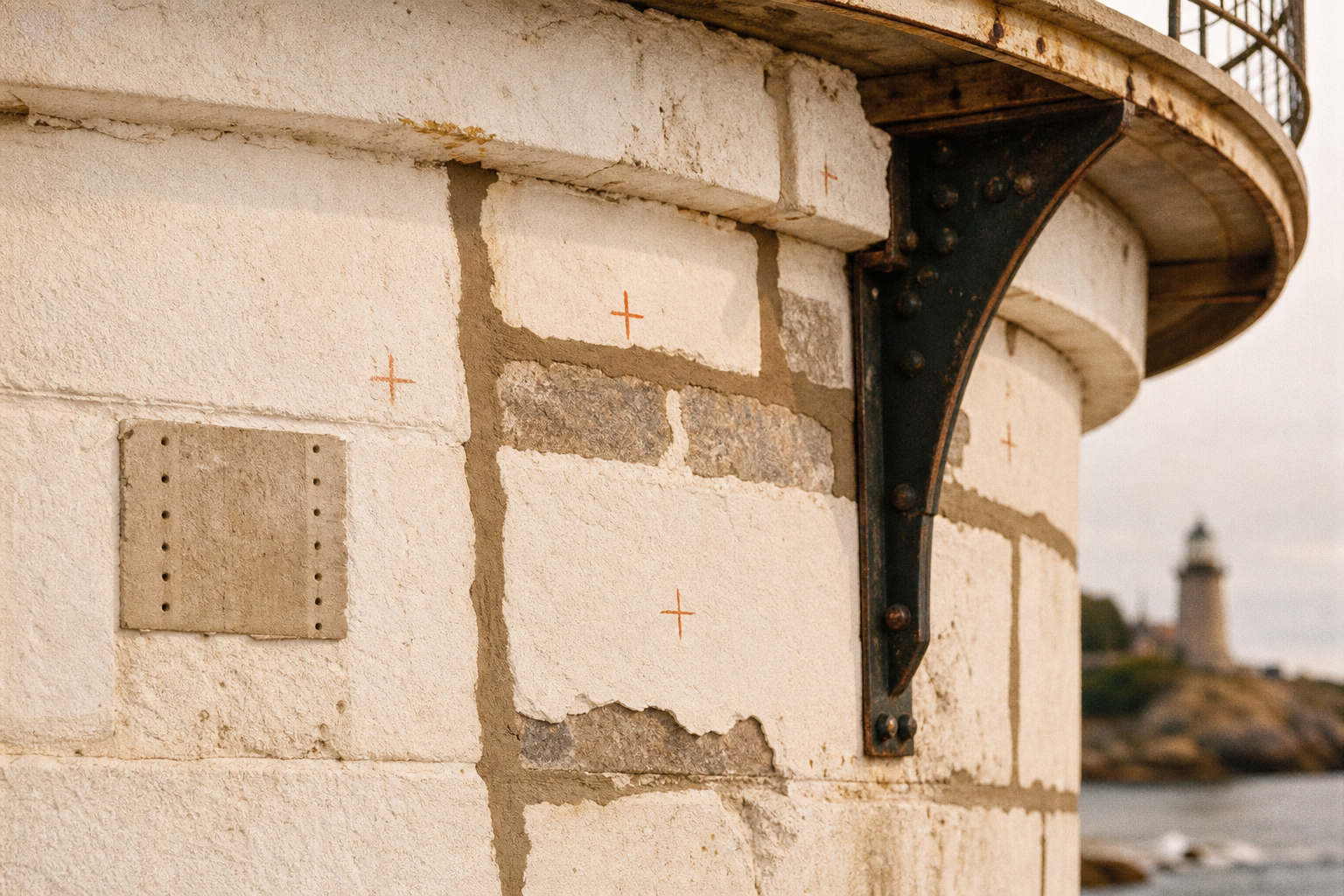
Masonry towers, improved lantern optics, and charted light ranges brought consistency to deeper commercial routes.
1900s–1950s
Keeper-led routines
Resident keepers synchronized lamp care, weather logs, and rescue readiness as communities grew around the stations.
1960s–today
Preservation-era stewardship
Automation reduced staffing, while civic groups and heritage trusts stabilized towers as regional landmarks and research sites.
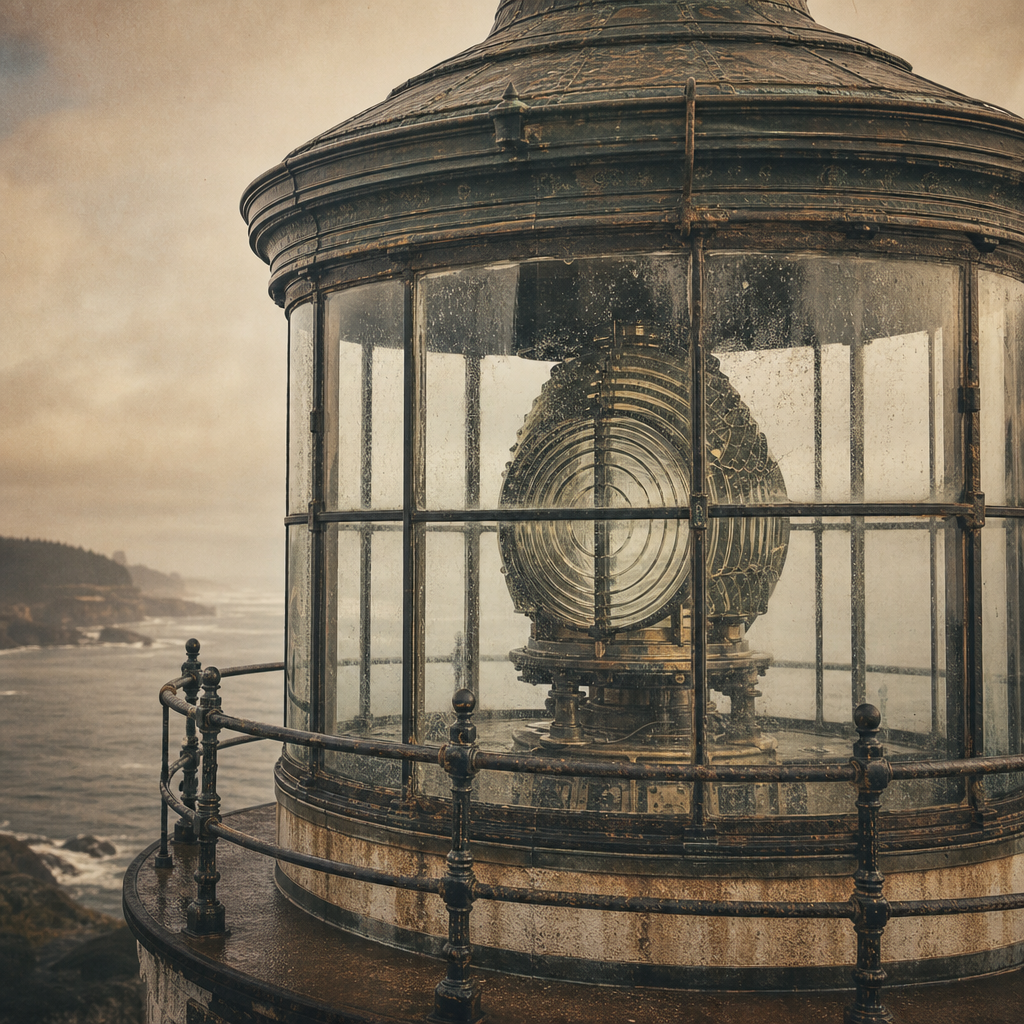
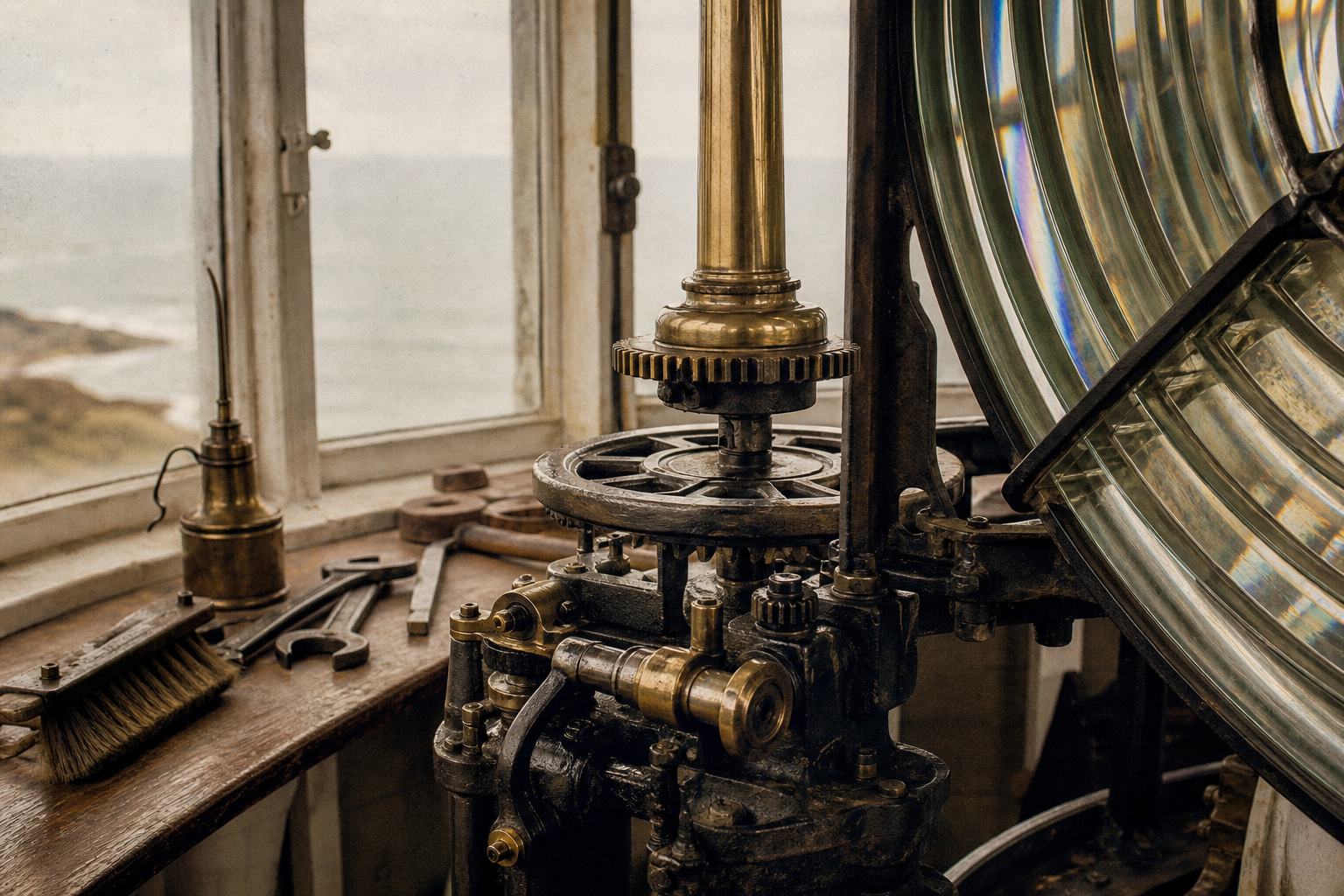
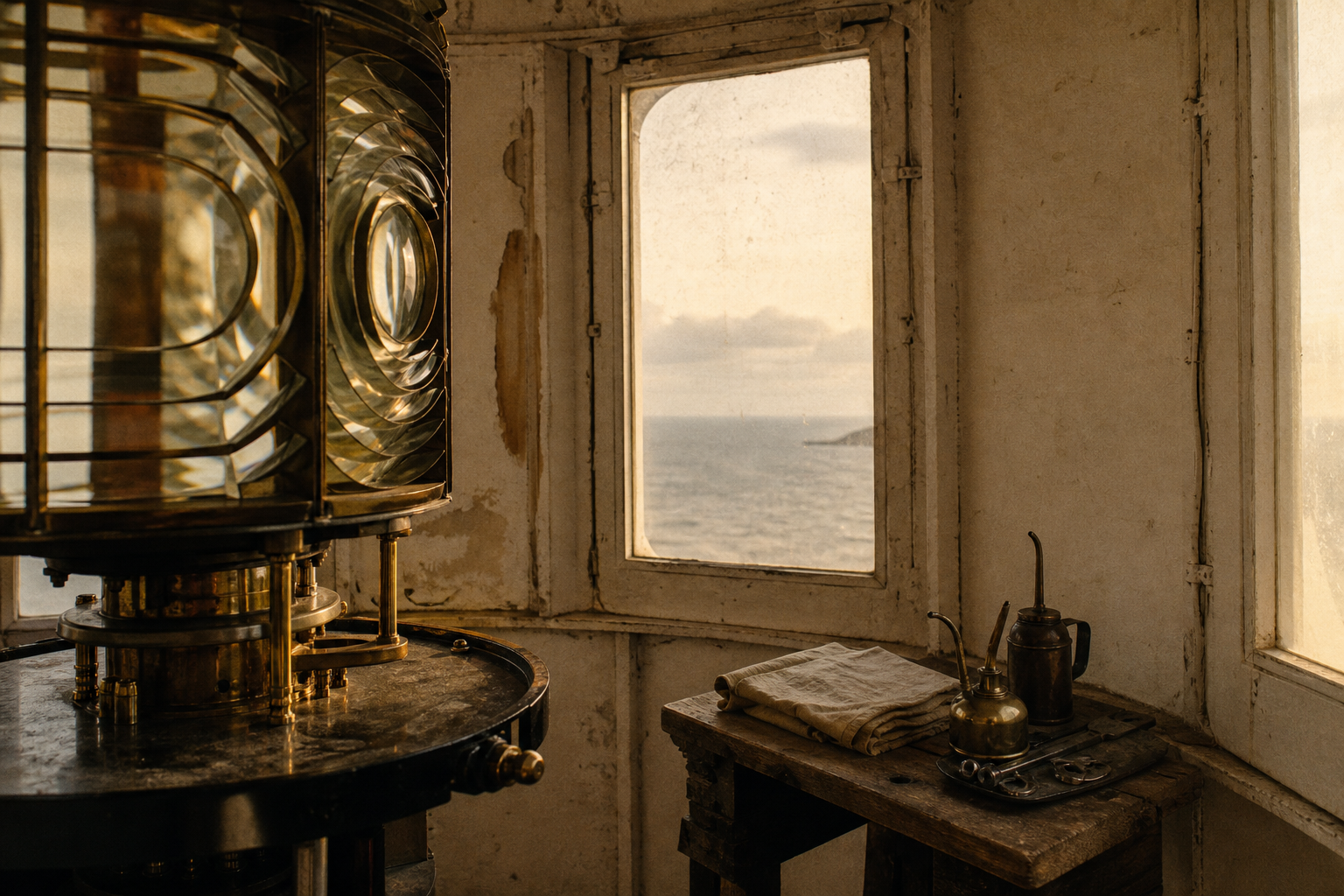
Before first light, Martha climbed the final stair with a tin of oil and a folded rag, checking each pane by hand so the beam would cut cleanly through dawn mist.
“If the glass stayed clear, the whole coast slept easier.”
Fog Ledger
Thomas and the Hourly Bell
On heavy evenings he kept one hand near the bell rope and the other on the logbook margin, marking wind shifts between strokes while kettle steam clouded the desk lamp.
“You rang for ships you could not see, and trusted they heard you anyway.”
Winter Shift
Elias on the Storm Walk
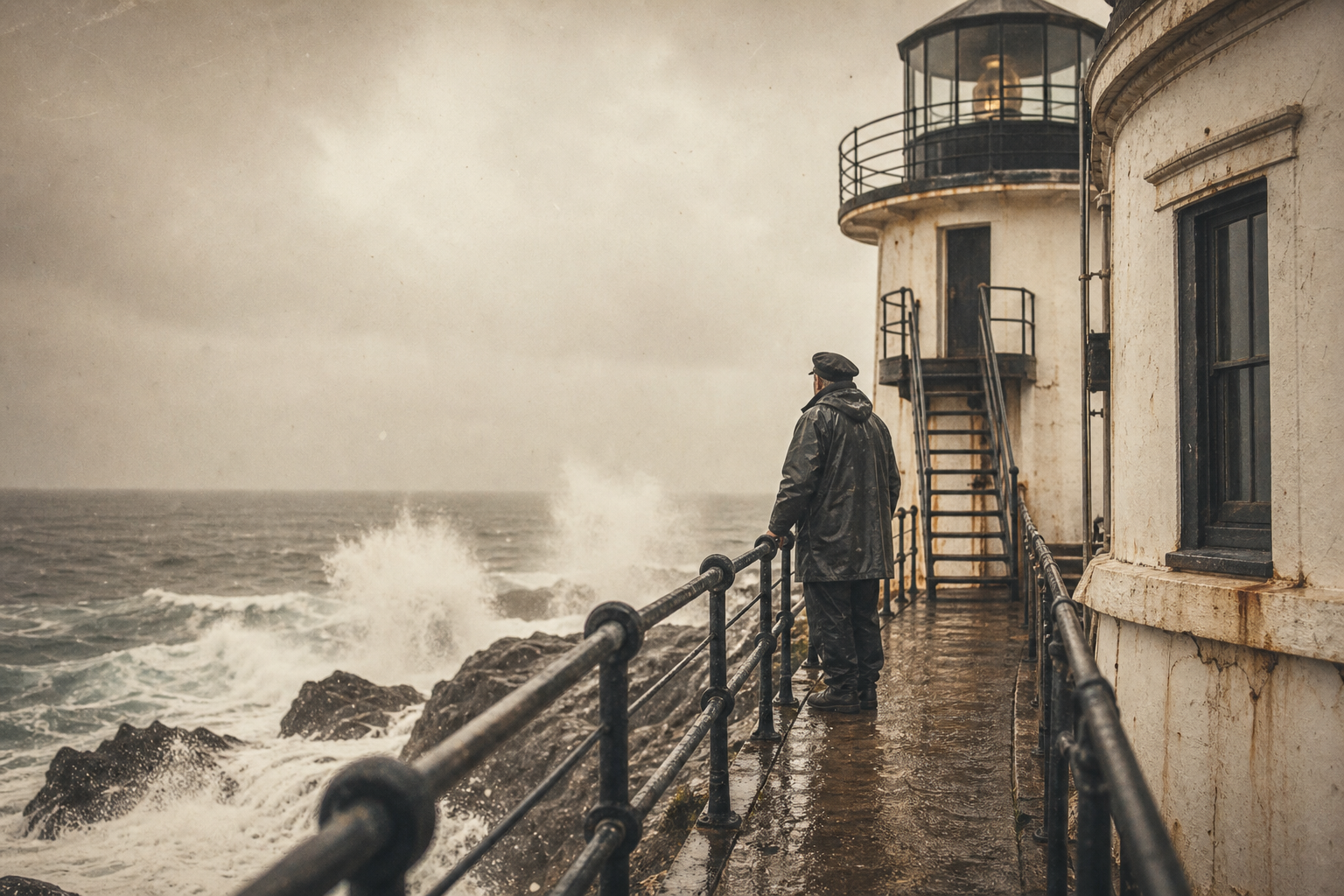
When gales hit the outer railing, Elias timed his checks between squalls, counting steps aloud to keep his pace steady from the service door to the signal post.
“Some nights the sea spoke first, and you answered by simply showing up again.”
Stylized coastline map with preserved tower markers, coastal traces, and compass ticks.
Visit Notes
Practical guidance for preserved lighthouse visits
A few quick clarifications to help you read the records and approach each site with care.
Can visitors enter preserved lighthouse towers?
Access varies by site. Some towers open only during guided heritage hours, while others are view-only from surrounding grounds for safety and preservation reasons.
When is visibility best for coastal towers?
Late spring through early autumn usually offers the clearest paths and longest daylight. Winter visits can be striking, though fog, wind, and closures are more common.
What does the archive include beyond photos?
Alongside imagery, we gather dated notes, keeper recollections, and preservation context. You can compare these materials in archive highlights and related profiles.
How should visitors approach heritage sites respectfully?
Stay on marked routes, respect barriers, and avoid climbing masonry or railings. Many structures are fragile; preserving them often depends on careful, low-impact visits.
How should I use mapped tower locations?
Use the tower map for orientation, not as a guarantee of public entry. Always confirm local access, parking, and seasonal notices before travel.